LAWYERS HILL ORIENTATION
20 images with Commentary and 46 Links

In 1608, English adventurer Captain John Smith explored the Chesapeake Bay’s flat marshy lands and rivers. Our particular ridge, foothills of The Piedmont Plateau, appeared as a welcoming sight for the sailors, promising refreshing woodlands, wildlife and spring-fed creeks. Smith mapped it as Blands Content on the River Belus. Over the next century the landscape was organized for British agrarian and mineral production.
By 1728, the bustling port town of Elk Ridge Landing had been established, named for the hilltop’s herds of majestic antlered elk. Hogsheads of plantation tobacco were coaxed down Rolling Road to waiting ships, ushering in three centuries of kaleidoscopic transport iterations which re-shaped the Patapsco River Valley.
After 1848, our forested promontory was dubbed “Lawyers Hill” by locals. Its perch overlooking the expansive Patapsco River delta offered a distant view of the ever-expanding Baltimore Harbor, alerting well-heeled residents with telescopes that their ship had come in.
And in 1952, my parents Joe and Ruth placed their bets on Lawyers Hill as a nice place to raise what was destined to become a very large family. They purchased a fine old house in need of a little TLC. It had been erected forty years earlier in 1912 by Robert Archibald Dobbin Jr, the great-grandson of Francis Scott Key, author of The Star Spangled Banner.
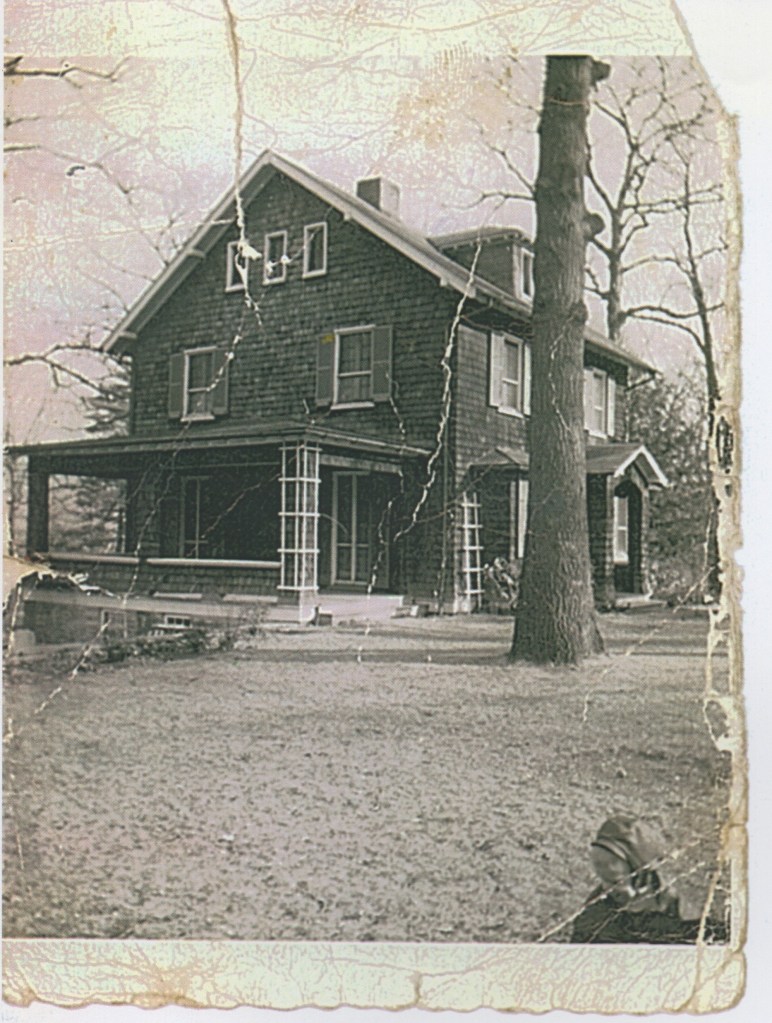
In the image above, I am captured in aviator cap as my parents are considering purchase of the house. Although time had taken its toll on the architecture, it still sported its original forest green shutters, white window trim and cedar shingle cladding which, when brand new, would have been quite honey golden in color, very L.L. Bean! 🏠
In 1912, Robert Archibald Dobbin Jr. outfitted his glam residence with the highest quality materials. A substantial brick chimney crowned the house, and the natural slate roof was trimmed with gleaming copper gutters and downspouts. The naturally sloping landscape was terraced with flagstone into three distinct levels which could be dubbed: “Presentation, Entertaining and Utility”. Four steps down from the broad flat front lawn, a cleverly recessed patio cozied up to the grand side porch. And tucked discretely underneath this side porch was a single car garage accessed from the rear of the house. A pair of windows beneath the porch at patio level offered a remarkable look down into the garage space, making it possible to admire the shiny new 1912 automobile while enjoying evening cocktails. This novel “integrated garage” was accessed via a curving driveway following the primary flagstone terracing wall, leading to a visionary concrete three-point turnaround pad for the automobile, all completely out of sight from the road. Imagine standing up on the side porch, martini in hand, studying the new Model T from above, parked obliquely on the turn-around pad before it is tucked away for the night! As the 32′ x 32′ house went up, tradesmen balancing on scaffolding had the opportunity to contemplate and discuss the fact that The Titanic had just gone down.
My family certainly never knew of the amazing historic connection to Capt. John Smith, Francis Scott Key nor to the neighborhood’s Dobbin Family dynasty, but the entire forested enclave was actually a bouquet of a dozen very fine – if aging – summer residences erected in the mid-19th century by Baltimore’s highest social order. This verdant hilltop, located 7 miles southwest of Baltimore, proved highly desirable to the city’s cognoscenti, thanks to the 1830’s construction of the B&O Railroad and its awe-inspiring Thomas Viaduct. To reach their Romantic woodland retreats on the Hill, gentry simply departed the overcrowded city via steam engine train, crossed the grand Patapsco River Valley, and met their waiting carriages.
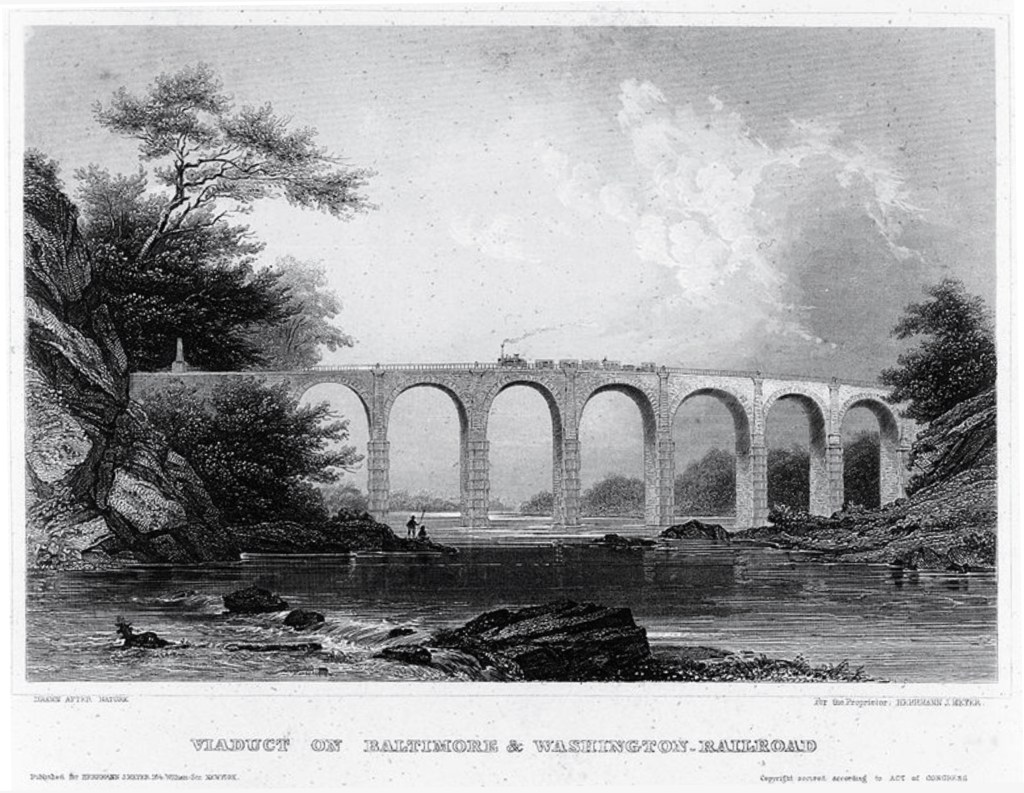
VIADUCT ON BALTIMORE & WASHINGTON RAILROAD renamed Thomas Viaduct, honoring Philip E. Thomas, who was first to serve as CEO of the Baltimore & Ohio Railroad.
What kind of people settled Lawyers Hill? To name two of note, 31 year old George Washington Dobbin purchased a large tract of this newly-accessible real estate in 1840 and built his summer home “The Lawn”. Destined to become Baltimore Supreme Court Bench Judge, he also co-founded Maryland Historical Society. One of Dobbin’s legal colleagues, John H.B. Latrobe built his Disneyesque “Fairy Knowe”, a fanciful residence up on the bluff. John’s brother Benjamin Henry Latrobe II was the railroad genius who designed the Viaduct for the B&O Railroad. Father was Benjamin Henry Latrobe, Second Architect of the US Capitol. Whew!
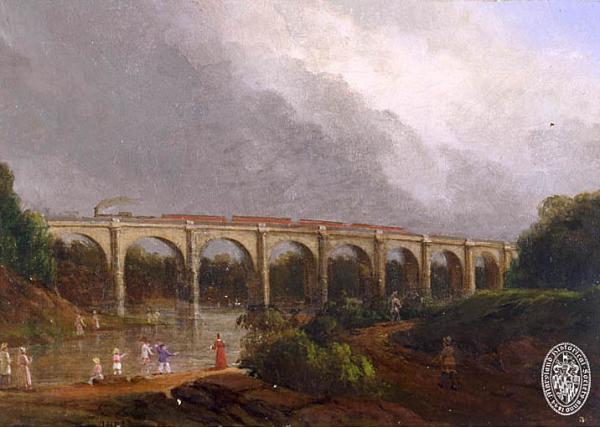
This is John H.B. Latrobe’s 1840s oil painting of The Thomas Viaduct. Masterfully envisioned and engineered by his brother Benjamin, it stands today as the world’s oldest curved arched railroad bridge, and is still in use.
Linked here is a unique 5 minute animated video which depicts the building process of The Thomas Viaduct. While it is definitely worth watching, keep in mind that the digital visuals naively suggest a 21st c. version of the riverbed, very shallow and much silted-up. The original width/depth of the Patapsco River at the start of the 19th century would have received significant Chesapeake Bay tidal flow. Of special note, the remarkable Viaduct Hotel – so masterfully depicted in the animated video – was erected in 1873 and demolished in 1950.
In the late 1950s, I sometimes walked bravely across this viaduct with my older brothers, acutely aware of the possibility of oncoming trains which one could hear approaching across the broad Patapsco River Valley.
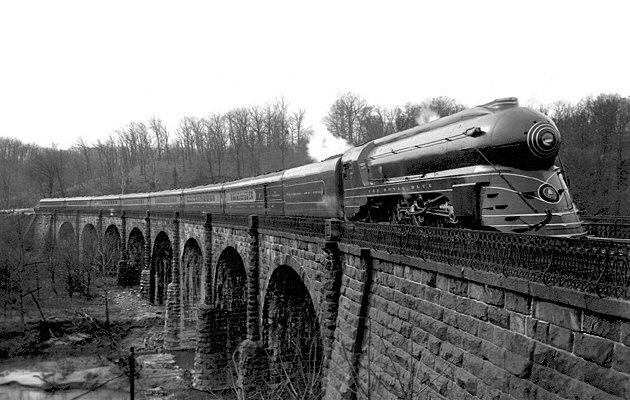
In the photo above, the pedestrian walkway on the convex side looks upriver into the forested ravine toward Ellicott City. Behind the locomotive’s puff of steam is a tree line break which marks the location of John H.B. Latrobe’s turreted country home.
John H.B. Latrobe’s Fairy Knowe, with its panoramic vista of the broad Patapsco River Valley, and The Thomas Viaduct, with its muscular grip on the Hill, eyed each other cinematically, and together this pair a visionary structures by the Latrobe brothers defined Lawyers Hill as an ideal destination for even more investment.
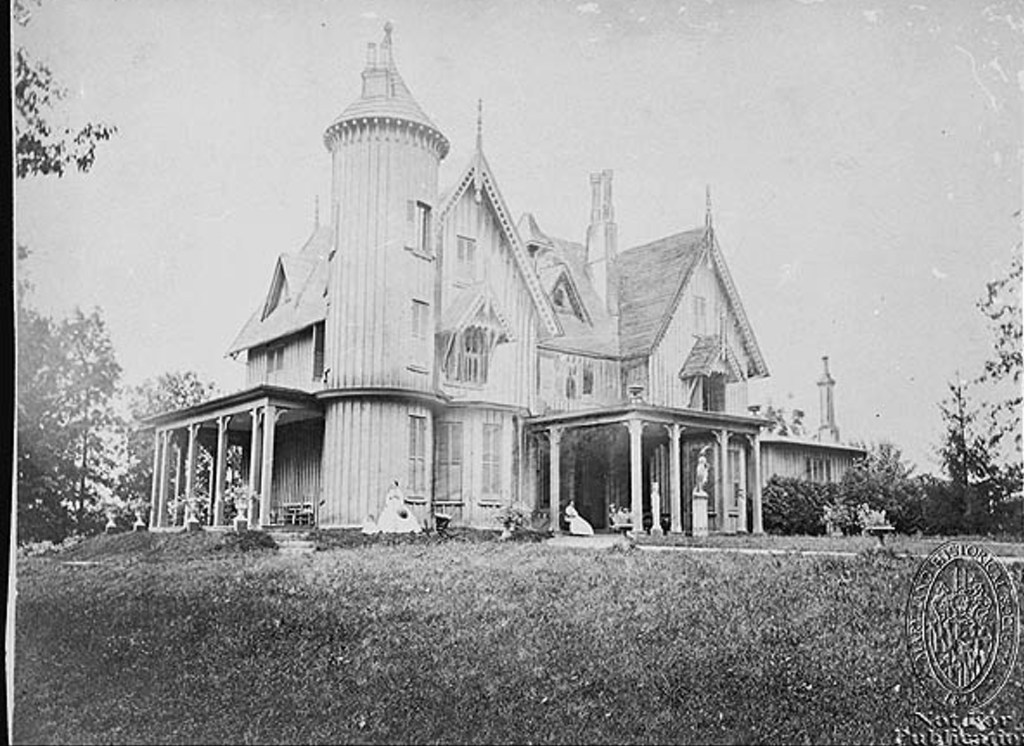
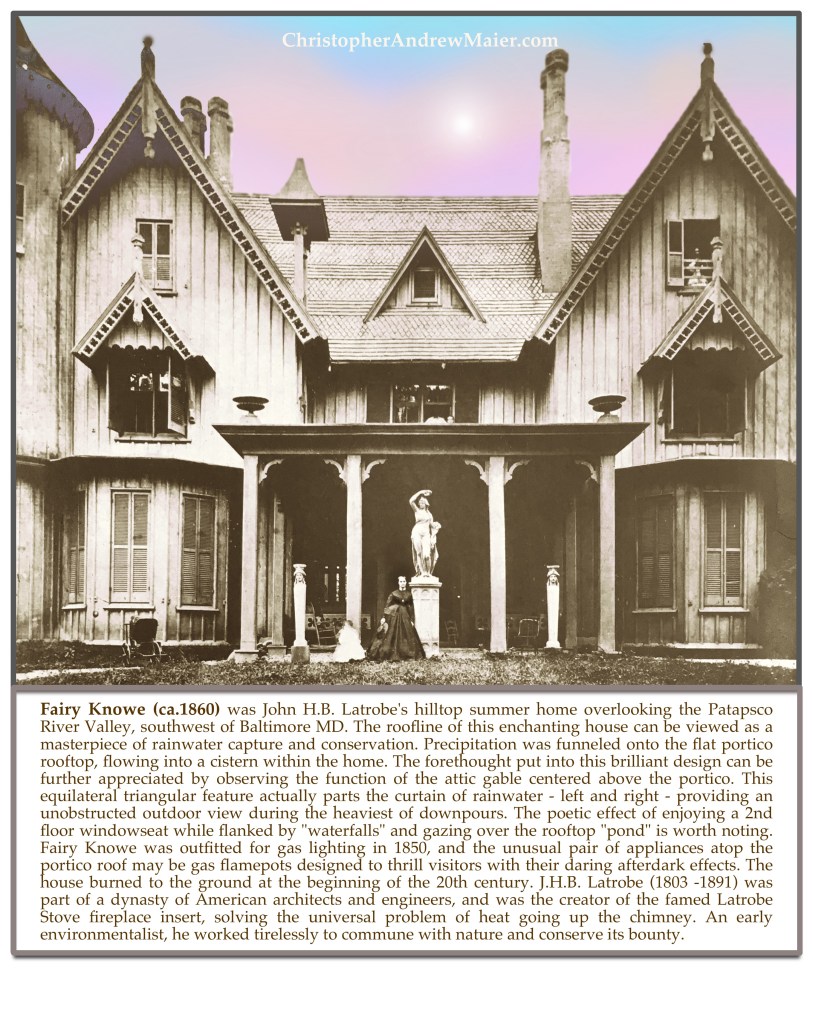
This is Fairy Knowe as it existed in 1860. It burned to the ground in the late summer of 1921. An earlier version of Latrobe’s summer house, low key and classical in form, was the subject of a glowing article published August of 1845 in The American Farmer. The original carriage barn still stands, transformed into a comfortable residence.
In short order, Judge Dobbin’s professional colleagues purchased additional tracts, and the nickname Lawyers Hill became the preferred address. His own hillside land holdings offered picturesque home sites set aside for his children as they grew up and married. Their lovely properties, Armagh, Hursley, Wayside, Maycroft and Wyndhurst, (all of which I knew well), descended onto a storybook creek named “Rockburn Branch”, which, only a century before, had been the vital natural resource that launched the plantation Belmont Manor.
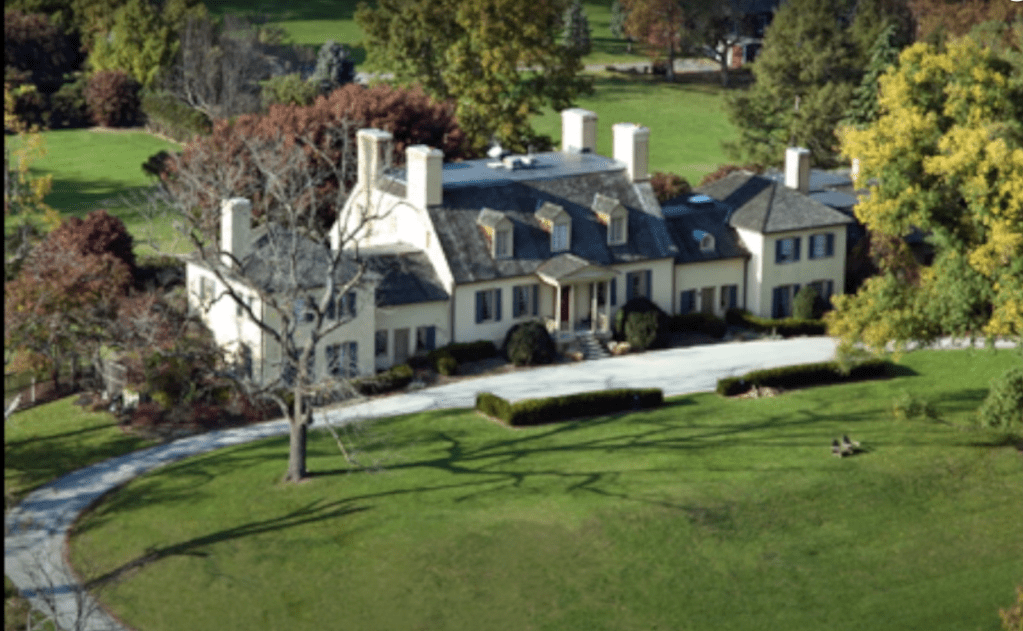
Today Belmont Manor and its surviving 68 acres is owned and operated by Howard County as an historical site and wedding venue. It borders the 14,000 acres of Patapsco Valley State Park.
In the 1960s, Belmont was owned by the Smithsonian Institution. I recall the facade was securely boarded up, covered in English ivy, with gently overgrown lawns and luxuriant fields of grain. Its quiet beauty inspired me to pursue life as an artist, as a composer, and as a writer. Below is a mid-20th century engraving by Don Swann.
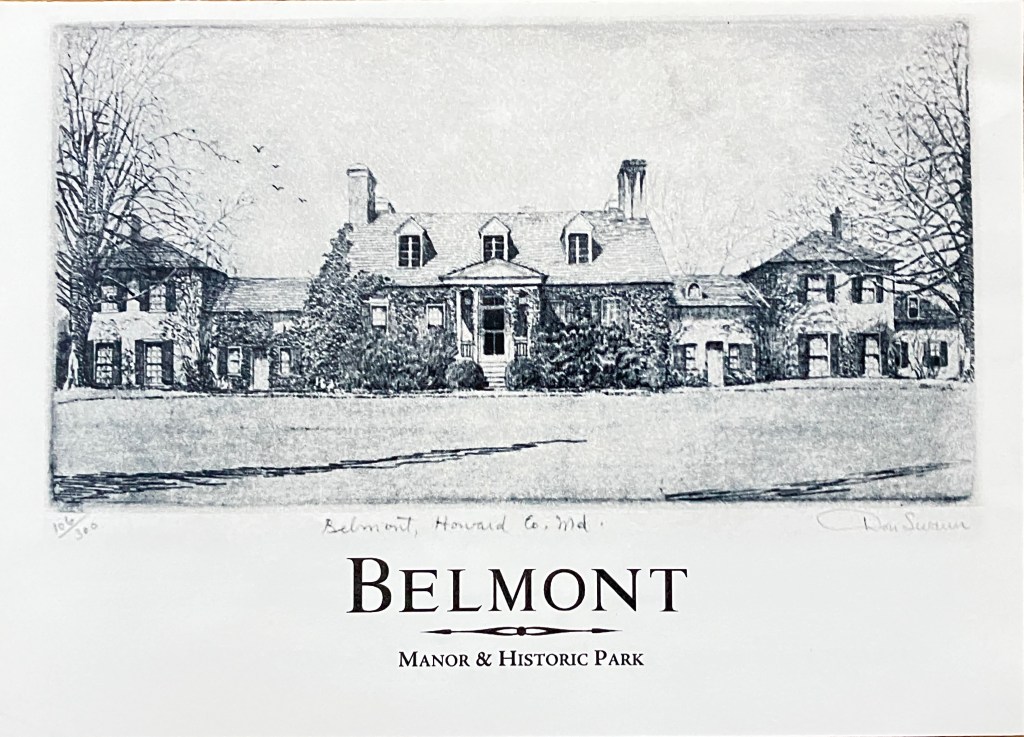
*
Just beyond the entry gates of Belmont Manor sprang the headwaters of Rockburn Branch. This voluptuous spring-fed creek cascaded downhill for two miles, zigzagging effortlessly through the virgin forest’s steep hillsides, delivering fresh water to the Patapsco River. A carriage lane followed the course upstream to Belmont.
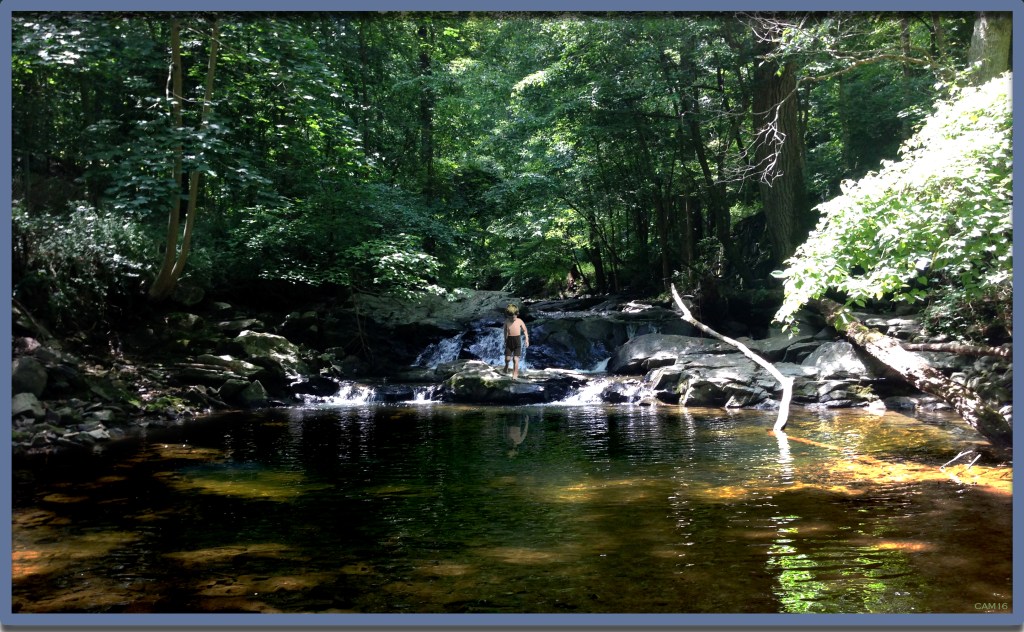
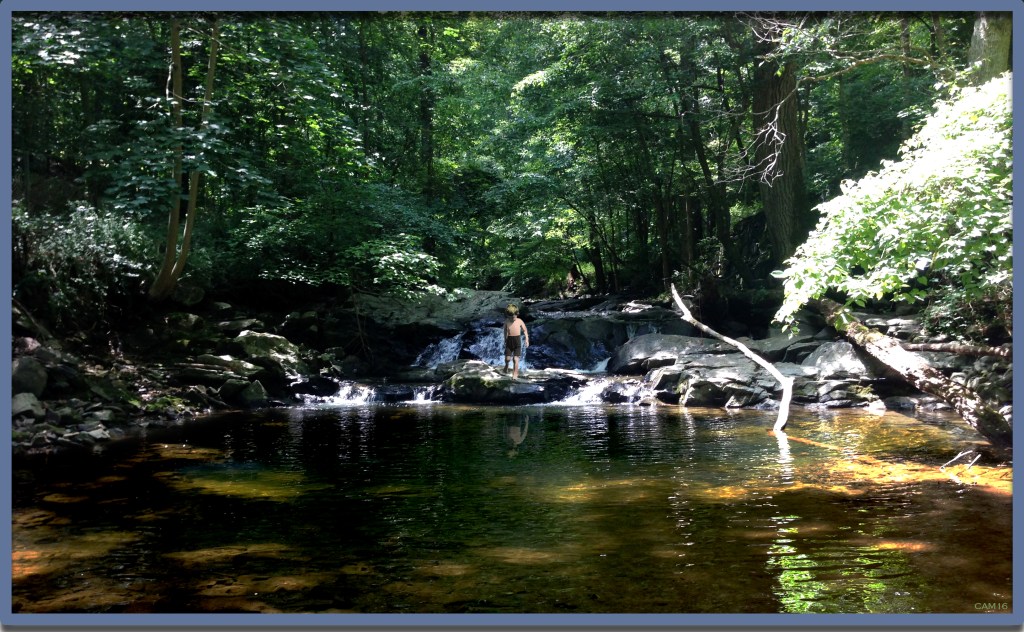
This is Dobbin Pool, into which I have Photoshopped a lone child contemplating his image reflected in the rippling waters. My personal memories of exploring Rockburn Branch are depicted here. We kids on The Hill simply referred to it as “The Creek”, which Indigenous Peoples would have enjoyed for untold thousands of years.
Imagine a curious child growing up in the mid-1950s in the midst of these glorious homes shaded by old growth forest. That was me, completely unaware of the city, and I lacked substantial information about where Lawyers Hill had come from and what it all meant! The older generation simply did NOT speak of the past.
The emotional and intellectual pull of Lawyers Hill and its forests cancelled any side effects that Elvis Presley and The Big Bopper might have otherwise had on me. As the World Wide Web blossomed, I was finally able to research the history of my neighborhood, putting the puzzle pieces together using my lifetime of special tools, suitably dubbed Art, Music & Ideas. Lawyers Hill and the Belmont environs have inspired me to compose Fairy Knowe Suite, a 14 minute Chorale Fantasie in 6 movements. Now a piano concerto, it is intended to be performed by full orchestra, soloists and chorus. Linked here is a sample: “Down The Creek” and “Wander Free”.
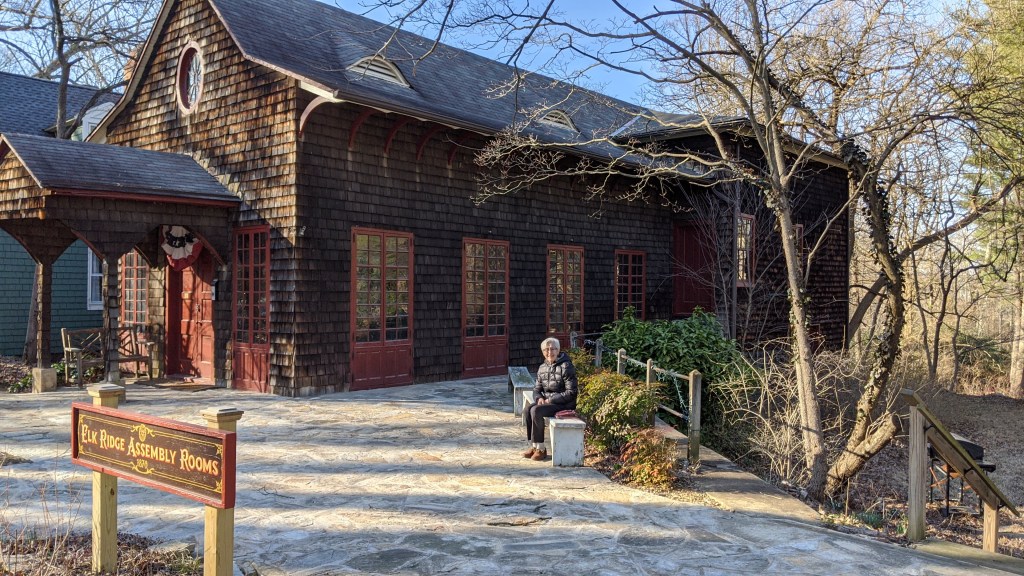
This is The Hall, a Victorian jewel box theater and the centerpiece of Lawyers Hill. It was built on land donated by Judge George Washington Dobbin following The Civil War. My cousin Eileen is pictured here in 2020, marking her very first return to Elkridge Assembly Rooms since the 1950s.
In 2015, as The Hall’s Sesquicentennial Anniversary approached, the Lawyers Hill community was actively involved in the building’s stabilization and restoration. I proposed improvements to the stage by launching Heptagon With The Wind. The results of my proposal are documented here: Heptagon With The Wind II.
My creative life was born at The Hall. As a child, I took part in summer plays, autumn square dances, spring housecleaning and annual 4th of July celebrations. I enjoyed studying the mysterious theater posters and organizing/re-organizing the many old stage props and trunks filled with antique costumes. Among The Hall’s myriad treasures were Degas-inspired scenic flats conjuring a forest, a collapsable top hat, a real spinning wheel, a broken down 19th century piano, an old wind-up Victrola, and an authentic Downton Abbey-style servant’s bell.
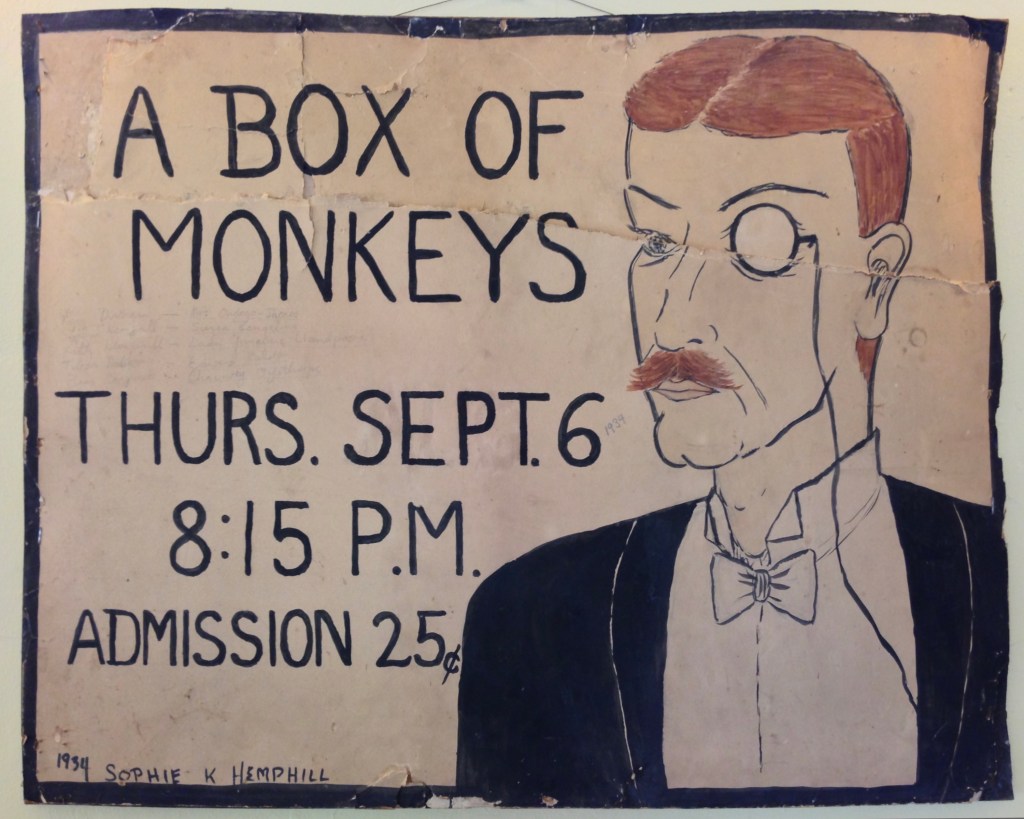
This poster was created for The Hall in 1934 by Lawyers Hill resident Sophie K. Hemphill. A Victorian play published in 1889 as “A Parlor Farce”, it’s downloadable here in pdf format, courtesy of The Library of Congress: A BOX OF MONKEYS
In 1963, as a naive 14 year old, I designed this 4th of July poster – perhaps attempting to emulate Sophie’s fine hand at lettering. My sketchy artwork and purple prose won the annual Elkridge Assembly Rooms 4th of July Poster Contest. It captures the special day’s featured events in verse like no other poster before or since, and has been on display at The Hall for 63 years, along with posters nearly twice that age.
A N D . . . T H E N . . . T H E . . . J A C K P O T ! ! !
In 1993, Lawyers Hill was finally catalogued by the United States Government. The official report, collected and archived by The National Park Service, was received and stamped 08/26/1993 by The National Register.
But gee, in 1993, Tim Bernes-Lee’s digital World Wide Web was in its infancy, and I was already a mature 44 years old, with my creative heart firmly rooted in studio artwork, acoustic grand piano composition, and hand-scribbled poetry, lyrics and stories. I, like everyone else, had to adapt to CyberSpace!
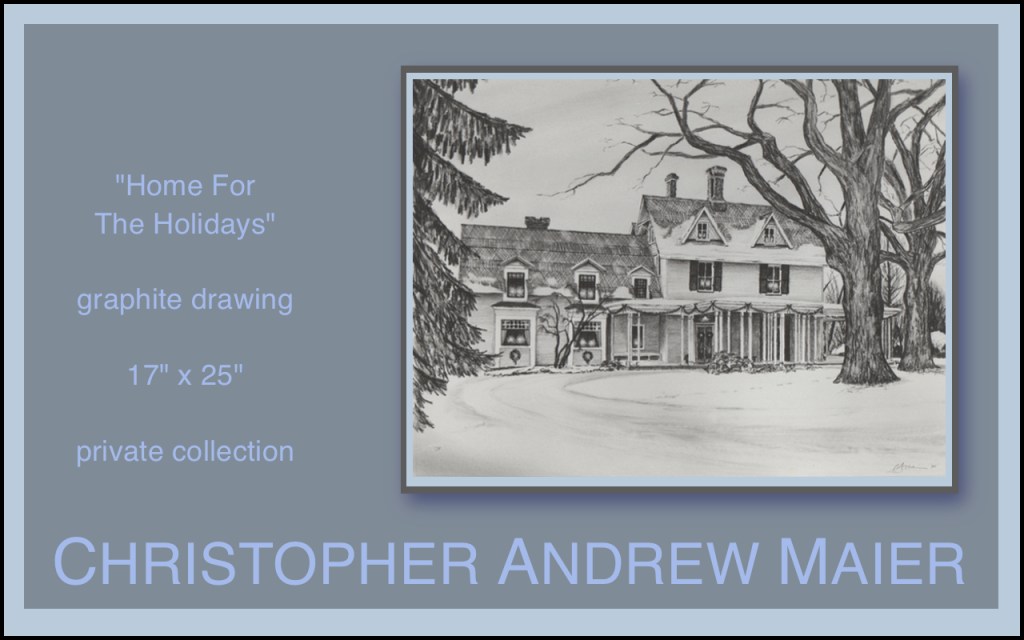
Above is my graphite studio drawing (1989) of Hursley Manor, one of the Dobbin estates whose expansive property bordering Rockburn Branch offered a one acre building lot for nephew Robert Archibald Dobbin Jr. in 1912 – later to be purchased by my parents in 1952. Hursley Manor is quite similar in style and date to Fairy Knowe (see below), and therefore it is possible that the architect for both was the same.

As depicted here during The Civil War, THOMAS VIADUCT is already 30 years old. In the 1950s, my friends and I explored the sandy perch depicted in the above engraving. I had not a clue about the earlier Civil War defense strategy which was played out in the shadow of “Claremont”, an estate house overlooking this very scene. Claremont is featured in the lower right corner of this 1860 map. Below is my photo of Claremont as it exists today, its second story open air porch balustrade lost to time..
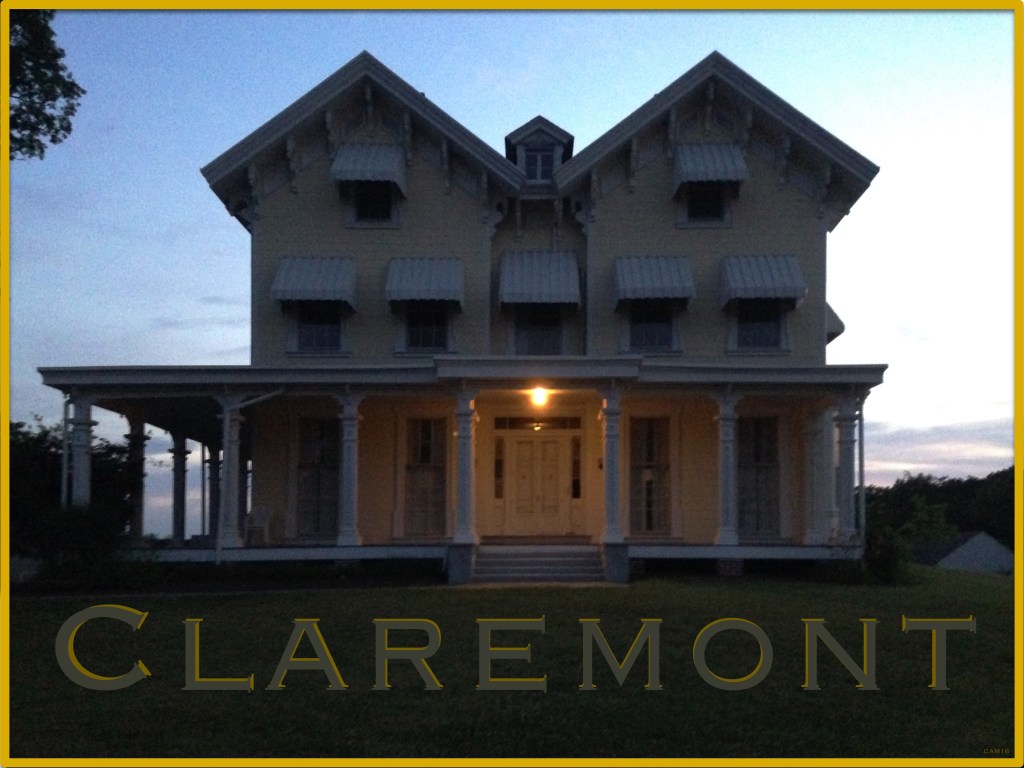
Both Claremont and Fairy Knowe shared neighboring promontories on Lawyers Hill looking east, with equally magnificent views of the Patapsco River Valley delta and the Baltimore Harbor beyond.
The Thomas Viaduct was built to serve as the main rail route to the Nation’s capital Washington DC, which had already supplanted Philadelphia as the seat of power. Samuel Morse’s first long distance telegraph message “What Hath God Wrought?” crossed this Viaduct – buzzing along on a quite novel, never-before-seen invention curiously called a Telegraph Pole. Also the legendary Tom Thumb steam engine race against a horse-drawn wagon occurred here. Union soldiers roamed Lawyers Hill during The Civil War, taking food and shelter perchance by force in country houses that I subsequently knew in the mid-20th century as a friendly place to ask for a drink of water and maybe a cookie.
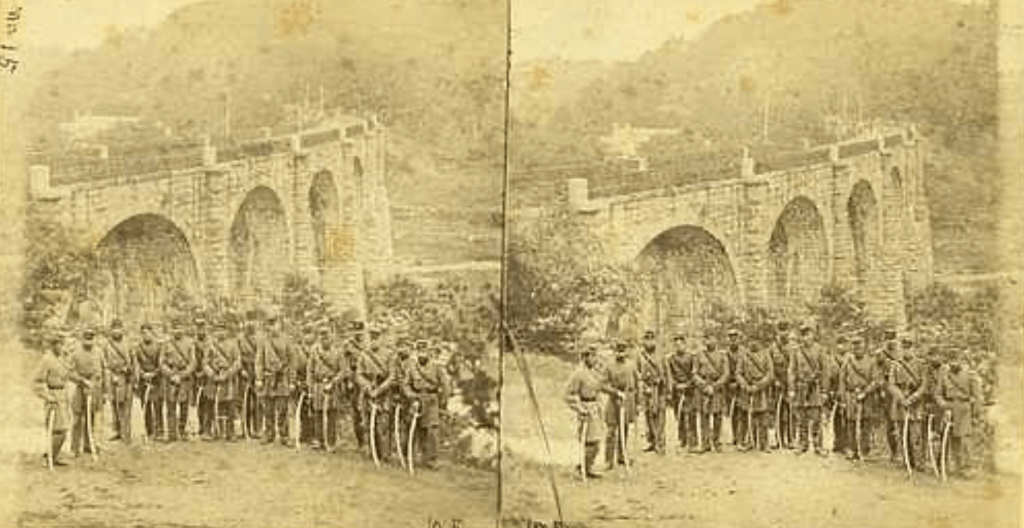
Of special note in the stereoscopic image above, the height of the viaduct arches can be gauged by focusing on the light reflecting on the base of the third arch from the left. Imagine how much silt has filled the river bed, covering almost half of the height of each arch. This vast layer of sedimentation and the attendant vegetation that took root and spread would eventually negate the ebb and flow of tidal waters that, only two centuries before, Captain John Smith had actually navigated a half mile upstream from this location to the mouth of Rockburn Branch. The Colonial Port of Elkridge also became unnavigable due to a century of careless dumping of ballast. Downstream along the Patapsco River, Baltimore emerged as the preferred harbor, with deeper waters and more sustainable shipping practices contributing to its ultimate success.
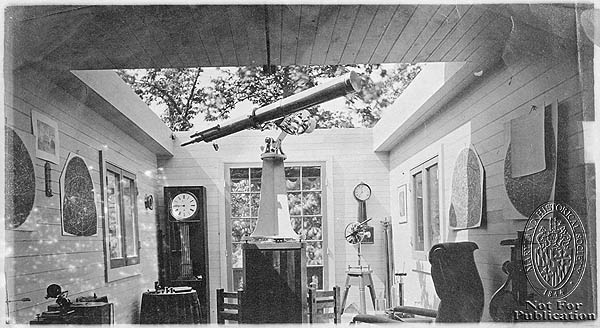
This is Judge Dobbin’s observatory, located at The Lawn on Lawyers Hill. The magnificent telescope, constellation maps and regulator clock displayed here are now the stuff of history, but the spirit of discovery lives on in this image. I was a guest here at Elkridge Assembly Rooms 2018 Candlelight Vigil, a holiday dream come true.
I learned last year in reading the following link that an elegant tureen (one of a trio of silver tureens awarded to Judge George Washington Dobbin on the occasion of his retirement) just missed landing in the pantry of Robert Archibald Dobbin Jr.’s house in 1912 as an inherited family treasure. It was unfortunately bequeathed to his older brother, G.W. Dobbin, about whom I know nothing. Curses!!!
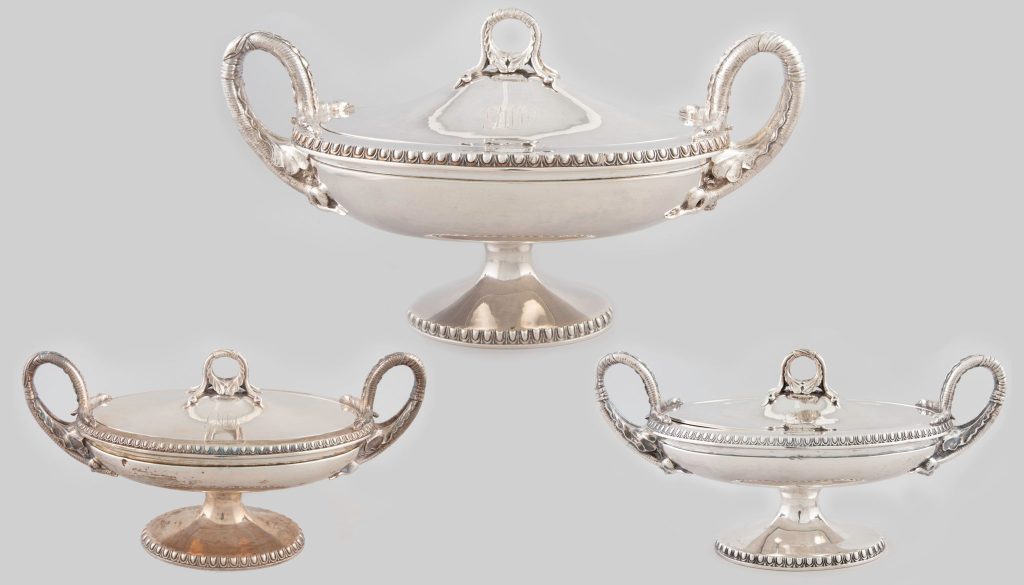
Had I learned that the tureen – on the lower left and awaiting restoration – had once been used on special occasions in my own family’s dining room, I’d most certainly have melted! 🥳 The good news is that the three matching silver tureens are now re-united and on display at Maryland Center For History and Culture.

This snowstorm was captured in December 1960 by my 14 year old brother Steven.
Our house – fortuitously captured in the very first pic on this page – possessed its original forest green window shutters that were carefully re-painted white by Dad at his basement workbench. This light touch gave a visual boost to our old house. My parents raised a family of 9 children here (1952-1975). In 1963 I entered seminary to find some peace and quiet. I later chose to become a public school teacher of Art, managing a 30 year career in which there was absolutely no peace and quiet!

Seen here one hundred years after its erection, the house my parents purchased in the mid-20th century has seen a handful of new owners and subsequent renovations. Its newest form includes an enclosed side porch and the removal of hedges and hemlock trees which had obscured the facade. Take note of the massive oak tree at left. It was, along with several of its forest brethren on the property, already mature a century ago as the house and its terraced lawns were taking shape around it. And regarding the paved straightaway directly in front of the house, Lawyers Hill Road was severely reconfigured in the decade preceding WWI, in order to allow smooth straightaways for automobiles. This county work rendered obsolete the gentler carriage lanes that had curved naturally through the once-virgin forest.
Pinned in these Google Earth screenshots, GPS: (39.2278, -76.7297) are the coordinates of Captain John Smith’s visit on June 13, 1608, a half mile from Lawyers Hill and my parents’ house. Note that the Patapsco riverbed had once been a full 500′ wide and deep enough to receive Smith’s shallop. The good captain’s skills as a cartographer are astounding!
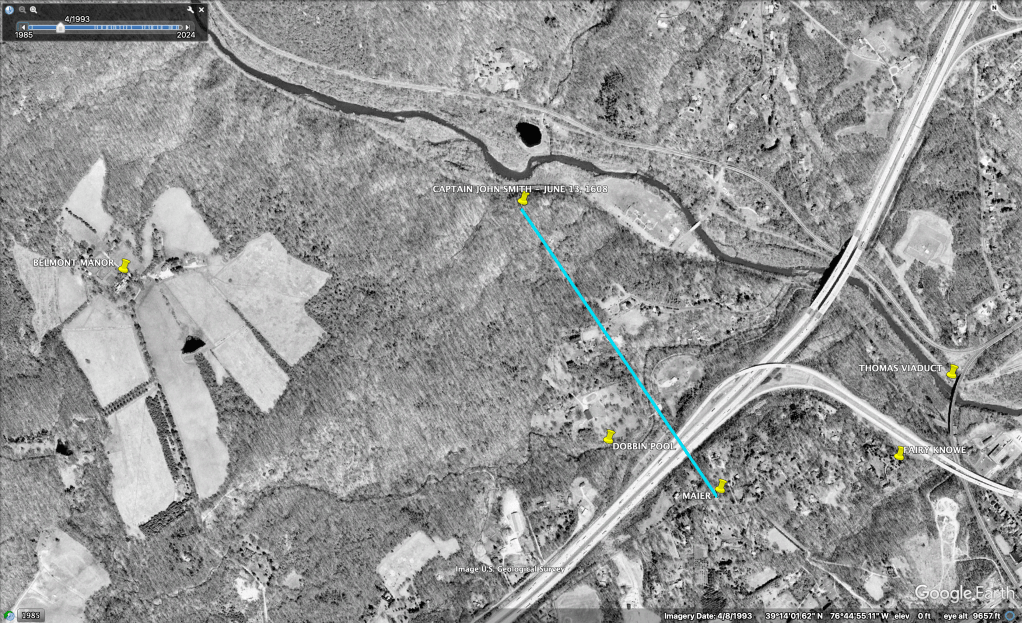

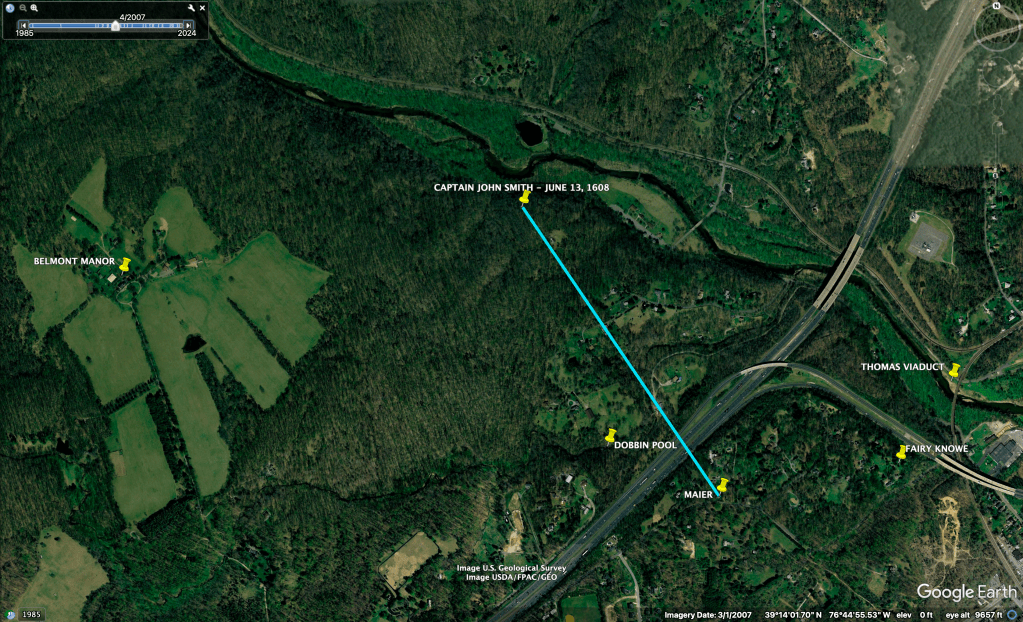
The glorious spread of native woodlands and waterways in the above pics was my playground as a child.
As mentioned in paragraph 3 at the start of this study, transportation has had a kaleidoscopic effect on Lawyers Hill and Elkridge. In 1967, Interstate 95 plowed through our woodlands, brazenly severing the quiet Lawyers Hill neighborhood from Belmont Manor, Dobbin Pool, Thomas Viaduct and Patapsco Valley State Park.
The recent collapse of the Patapsco River’s Francis Scott Key Bridge drives home the curious thought that we may truly not know what we are doing to our fragile Earth.
*
On a brighter note, let’s envision Captain John Smith visiting Rockburn Branch and taking a refreshing dip in “Dobbin Pool”, that idyllic basin of fresh water for which Indigenous Peoples would have had a much more suitable name! 🤔
Imagine Smith standing on the rock, gazing at his reflection in the rippling surface, feeling like a child again!
https://christopherandrewmaier.com
 Christopher Andrew Maier
